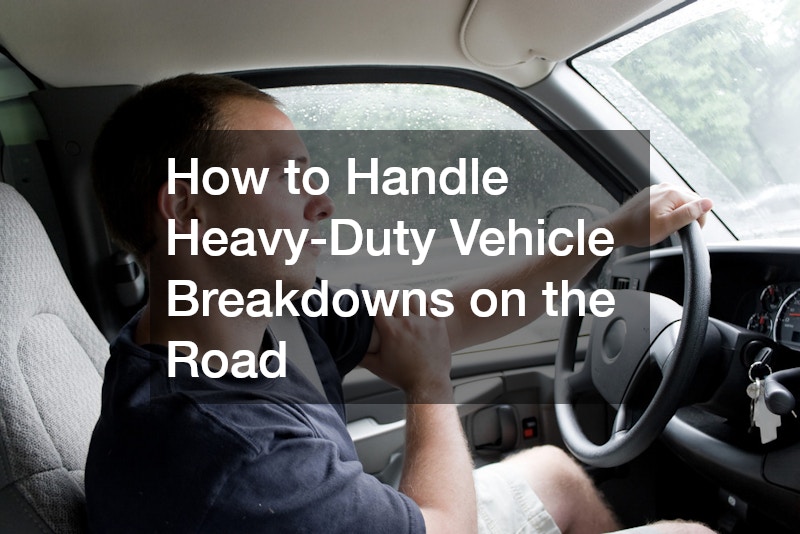
Operating a heavy-duty commercial vehicle comes with tremendous responsibility. Whether you are driving a Class 8 tractor-trailer across state lines, operating a municipal dump truck, or managing a regional delivery fleet, experiencing an unexpected mechanical failure on the open road is one of the most challenging situations you can face. Unlike passenger cars, commercial rigs weigh tens of thousands of pounds, carry time-sensitive cargo, and occupy a massive footprint on busy highways.
When a heavy vehicle stalls, suffers a sudden blowout, or loses air pressure, the situation quickly evolves from a minor logistical headache into a major safety event. A disabled commercial truck sitting on a narrow shoulder creates severe traffic hazards, exposes the driver to passing high-speed vehicles, and costs hundreds of dollars every hour in delayed shipments and idle time.
Managing a heavy-duty breakdown requires a calm, disciplined approach centered on safety, accurate mechanical triage, and clear communication. Knowing exactly what steps to take during those critical first thirty minutes can prevent highway accidents, minimize expensive towing fees, and get your rig back on the road safely. This comprehensive guide provides an actionable protocol for handling commercial vehicle breakdowns from the moment trouble begins to the final roadside repair.
Execute Immediate Highway Safety and Vehicle Positioning

Navigate to the Shoulder, Deploy Warnings, and Secure the Rig
When an engine light flashes red, oil pressure drops, or a tire blows, your immediate priority is getting your rig to the safest possible location. Power loss in a heavy vehicle can happen rapidly, meaning you must make split-second decisions while you still have momentum. Avoid stopping in active travel lanes, on blind curves, just over hill crests, or on narrow bridges whenever possible.
If the truck is still mobile, signal clearly and coast toward a wide right-hand shoulder, an emergency turnout, or an off-ramp parking area. Once you come to a complete stop, set the tractor and trailer parking brakes immediately, turn on your hazard flashers, and shut down the engine to prevent secondary mechanical damage.
Once the vehicle is secured, establishing a visible safety perimeter is your next critical task:
- Put on high-visibility safety gear: Always put on a Class 2 or Class 3 reflective safety vest before opening your cab door or stepping onto the highway shoulder.
- Exit the vehicle safely: Watch passing traffic carefully through your side mirrors. If traffic is heavy on the driver’s side, exit through the passenger door to avoid stepping directly into live lanes.
- Deploy emergency reflective triangles: Federal Motor Carrier Safety Regulations require placing warning devices within ten minutes of stopping. Place your first triangle 10 feet behind the rear bumper on the traffic side, the second 100 feet behind in the center of the shoulder, and the third 200 feet behind, facing oncoming traffic.
- Adjust triangle placement for curves or hills: If you are stopped on a curved road or near a hill crest, move the furthest triangle back 100 to 500 feet to give approaching drivers advance warning.
After securing your safety perimeter, contact dispatch to report your exact status. Requesting fast-response emergency roadside services ensures that professional traffic control units or mobile service trucks equipped with high-intensity warning lights are dispatched to protect your rig while you wait on the shoulder.
Triage Stopping Power and Air Brake System Failures
Identify Pneumatic Air Leaks, Spring Brake Lockups, and Wheel End Issues
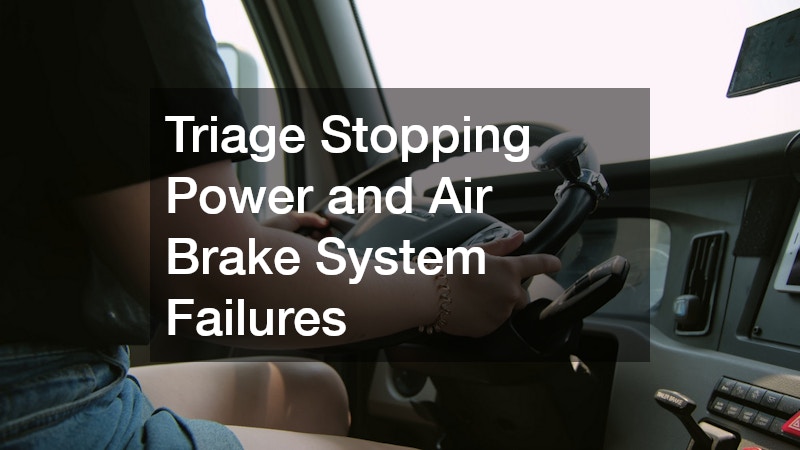
Air brake systems are the lifeline of commercial vehicle safety. Because heavy trucks rely on compressed air to hold off powerful mechanical spring brakes, any severe loss of air pressure will automatically cause the emergency brakes to drag or lock up completely. If your low-air warning buzzer sounds while driving, or if you feel the vehicle pulling violently to one side, you are facing a critical stopping power emergency.
Once pulled over, perform a visual and auditory inspection of your air system. Listen for loud, escaping air around air tanks, gladhands, brake chambers, and leveling valves. A ruptured air line or a blown diaphragm in a brake chamber drops system pressure rapidly, preventing the parking brakes from releasing or causing the service brakes to lock up while stationary.
Inspect these critical brake components during a roadside failure:
- Check pneumatic line connections: Inspect the coiled gladhand hoses between the tractor and trailer for kinks, dry rot, or disconnected rubber seals.
- Examine spring brake chambers: Look for damaged clamp rings or bent pushrods on the brake actuators along each axle.
- Check for overheated wheel ends: Look for smoke, burnt oil smells, or glowing metal around brake drums and wheel hubs, which indicate a dragging shoe or frozen caliper.
- Inspect friction linings and shoes: Look through the dust shield inspection slots to verify that friction material has not separated from the metal backing plate.
If your air system cannot build pressure due to a failed valve or damaged line, scheduling an immediate brake repair on the shoulder is essential to avoid destroying tires by dragging locked wheels. Utilizing a specialized mobile brake service brings heavy-duty compressors, replacement air lines, valves, and brake chambers directly to your location, allowing technicians to fix pneumatic leaks and cage-locked spring chambers safely so the vehicle can roll again.
Mobilize On-Site Mechanical Diagnostics and Rapid Repairs
Distinguish Field-Fixable Engine Glitches from Major Drivetrain Failures
Not every heavy-duty breakdown requires a flatbed or heavy rotator tow truck. Many common engine failures—such as clogged fuel filters, blown turbocharger hoses, failed alternators, or minor electrical glitches—can be resolved right on the shoulder by a skilled mobile technician. Performing basic diagnostic triage helps you give accurate information to dispatch and repair providers, saving hours of downtime.
Start by retrieving active diagnostic fault codes from your dashboard display or electronic logging device (ELD). Note the specific Fault Code, Suspect Parameter Number (SPN), and Failure Mode Identifier (FMI). These codes tell mobile technicians precisely which sensors, injectors, or emissions components are failing before they pack their service van.
Evaluate these common engine and driveability issues before calling for service:
- Inspect fuel filters and lines: Check fuel water separators for cloudy fuel, ice, or heavy sediment buildup that starves the engine of fuel.
- Check charge-air cooler boots: Look for loose hose clamps or split silicone boots on the turbocharger piping, which causes sudden power loss and heavy black exhaust smoke.
- Examine drive belts and pulleys: Look for snapped serpentine belts, seized fan clutches, or failing alternator pulleys that cut off battery charging.
- Monitor fluid levels and leaks: Inspect under the engine bay for heavy puddles of green or red coolant, engine oil, or hydraulic fluid.
When severe mechanical faults occur, partnering with technicians experienced in heavy-duty truck repair ensures that complex computer diagnostics, fuel system priming, and sensor replacements are handled correctly on the road. Relying on equipped local mobile truck repairs allows fleet operators to fix minor component failures on site, avoiding expensive towing charges and keeping original delivery schedules intact whenever possible.
Manage Commercial Trailer Structure and Heavy Recovery Protocols
Inspect Cargo Straps, Realign Axles, and Arrange Heavy Winching
While the tractor provides power and steering, the trailer carries the financial weight of the operation. Trailer-specific breakdowns present unique challenges, particularly when dealing with fully loaded dry vans, refrigerated units, or flatbeds. Structural failures—such as broken leaf springs, damaged landing gear, shifted slider tandems, or bent kingpins—demand specialized tools and heavy lifting capabilities.
If a trailer axle shifts out of alignment due to a broken shear pin or failed locking pin on the tandem rail, the trailer will dog-track dangerously down the road, scrubbing tires and threatening to clip adjacent vehicles. Similarly, a refrigerated unit (reefer) engine failure threatens temperature-sensitive cargo, requiring immediate cooling maintenance to avoid total freight loss.
Take these steps to manage trailer and structural stability during a breakdown:
- Verify cargo load distribution: Check inside the trailer if safe to do so, ensuring cargo straps have not snapped and heavy pallets have not shifted against side walls.
- Inspect trailer landing gear: Ensure the landing gear legs are fully retracted and that cross-braces are not bent before attempting any roadside movement.
- Examine axle suspension components: Check air bags for punctures, verify torque arm bolts are tight, and inspect leaf spring stacks for cracked leaves.
- Check trailer door latches: Ensure rear roll-up or swing doors are tightly latched and sealed to prevent cargo loss on the shoulder.
When trailer structures or heavy axles sustain severe damage, contacting dedicated semi truck trailer repair specialists ensures that mobile welding, tandem alignment, and structural support are deployed safely. If the rig is stuck in a ditch or incapacitated on a steep incline, contracting a professional tow truck company equipped with Class 8 heavy rotators guarantees that your tractor, trailer, and cargo are winched and recovered without inflicting secondary frame damage.
In addition to these services, regular maintenance checks can help prevent such issues before they arise, saving time and costs in the long run. It’s essential to have a reliable repair company on speed dial, as prompt service can minimize downtime and get you back on the road quicker. Investing in quality repairs not only ensures safety but also extends the lifespan of your equipment, making it a smart choice for any trucking operation.
Secure Specialized Transport and Long-Term Component Protection
Coordinate Heavy Haul Transport and Protect Replacement Hardware from Corrosion
When on-site mechanical repairs are impossible due to severe internal engine failure, blown differentials, or twisted driveshafts, transporting the commercial vehicle to a full-service repair shop becomes mandatory. Hauling a 30,000-pound tractor or a fully loaded trailer requires specialized towing equipment, certified operators, and strict adherence to safety protocols.
Before allowing a heavy tow vehicle to hook up to your rig, ensure the driver executes proper driveline disconnect procedures. On rear-wheel-drive tractors, the drive axle shafts must be pulled, or the main driveshaft must be unbolted and secured. Failing to disconnect the driveshaft before towing causes the drive wheels to spin internal transmission gears without oil pressure, completely destroying the transmission within a few miles.
Keep these key factors in mind when coordinating heavy commercial transport:
- Verify tow hook attachment points: Ensure tow chains or under-lift forks attach directly to factory frame tow eyes or axle beams, never to steering tie rods or bumper covers.
- Manage air line supply to towed units: Verify that the towing vehicle supplies continuous air pressure to the towed rig’s brake system to keep emergency spring brakes disengaged.
- Document pre-tow vehicle condition: Take clear, time-stamped photographs of the tractor front end, cab panels, and trailer sides before the tow hookup begins.
- Confirm destination shop capabilities: Ensure the receiving repair facility has high bays, heavy lifts, and certified technicians ready to accept your commercial vehicle.
For complex towing needs, arranging comprehensive towing services through trusted local tow truck services provides lowboy trailers, heavy flatbeds, and under-lift recovery vehicles tailored to your specific vehicle weight and dimensions. Once your rig is in the shop and undergoing repairs, consider applying custom powder coating to replacement steel brackets, battery boxes, rim faces, and frame crossmembers. Powder coating creates an impenetrable barrier against harsh road salts, moisture, and chemical de-icers, protecting your newly installed hardware from rust and corrosion during future highway runs.
Additionally, collaborating with experienced technicians for your repair and customization work ensures that every detail is handled with precision, enhancing the longevity and performance of your vehicle. Regular maintenance checks and thorough inspections can further prevent potential issues, allowing you to hit the road with confidence after each service. Investing in the quality of your equipment not only improves its functionality but also contributes to a safer towing experience.
Conclusion
A heavy-duty vehicle breakdown is a true test of a driver’s preparation, professional discipline, and technical knowledge. While experiencing a mechanical failure on a busy highway is stressful, taking immediate control of the situation through proper vehicle positioning, clear safety perimeter setups, and systematic diagnostic checks protects both your life and your financial investment.
Remember that managing a commercial breakdown is a team effort. By knowing when to utilize mobile mechanical services and when to call for heavy-duty towing recovery, you minimize costly fleet downtime and keep highway corridors safe for all drivers. Audit your onboard emergency kit today, verify that your reflective triangles are clean and accessible, and keep trusted commercial recovery contacts stored in your phone—because being prepared is the best tool every professional driver carries.